
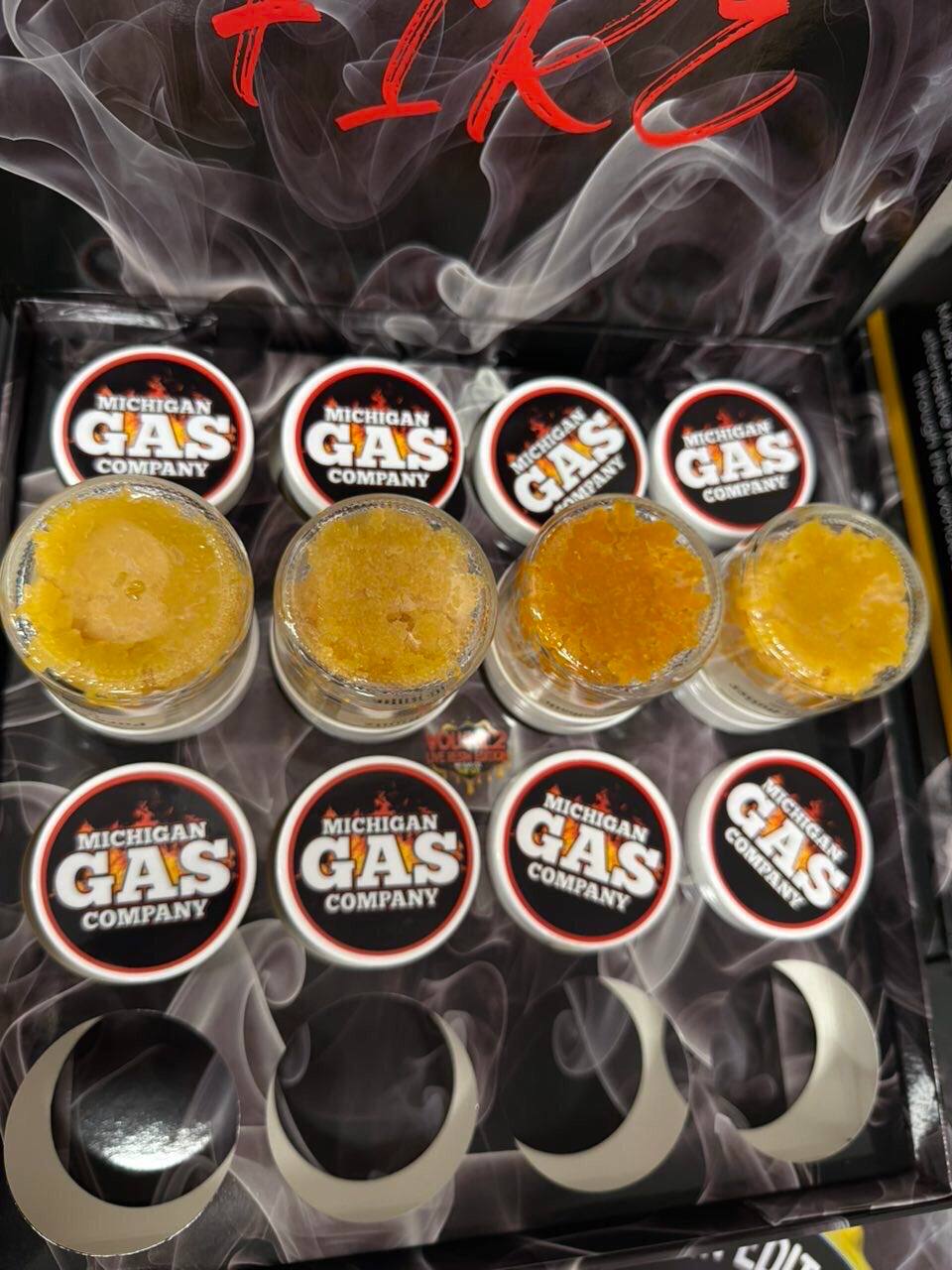
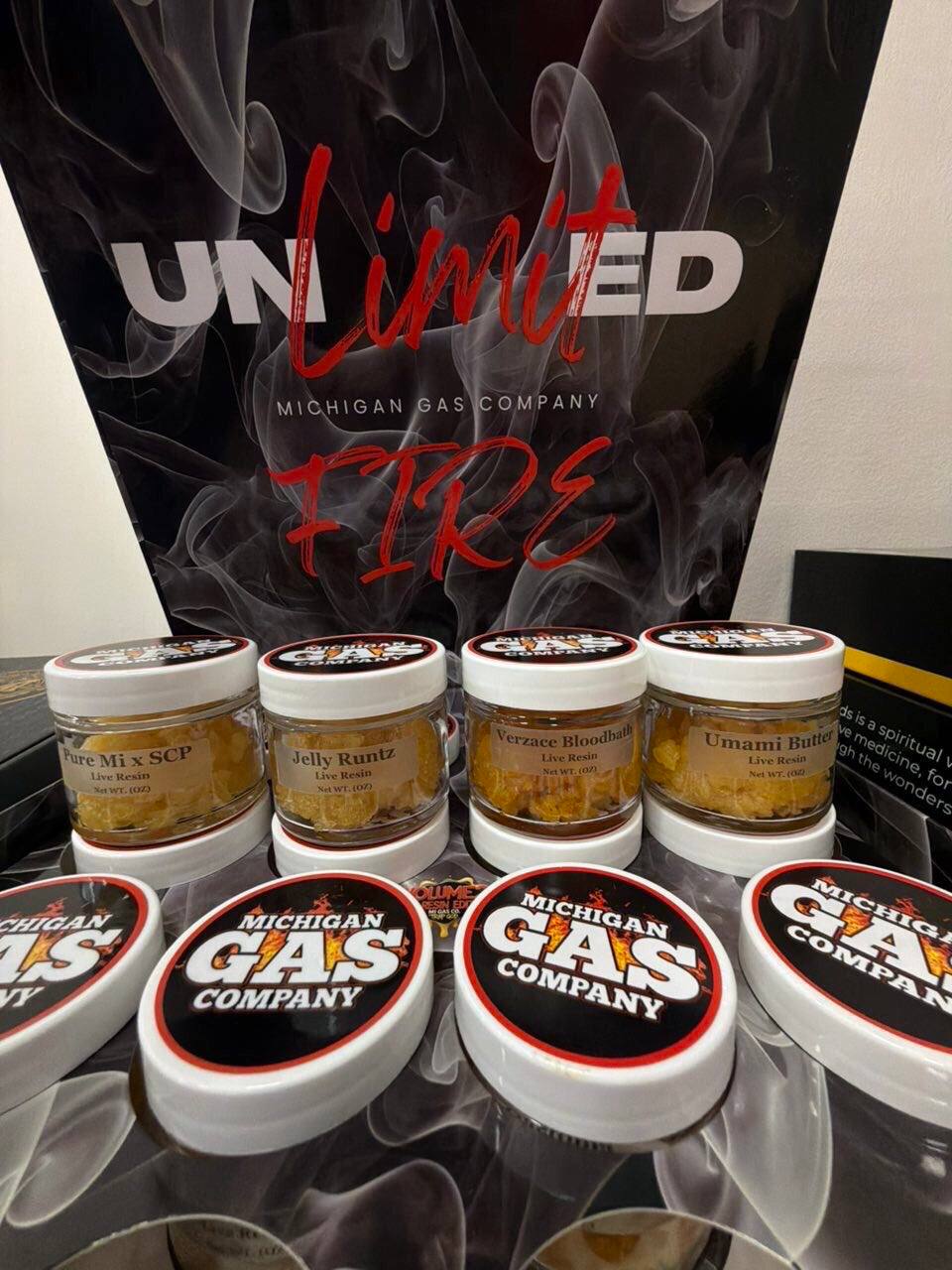

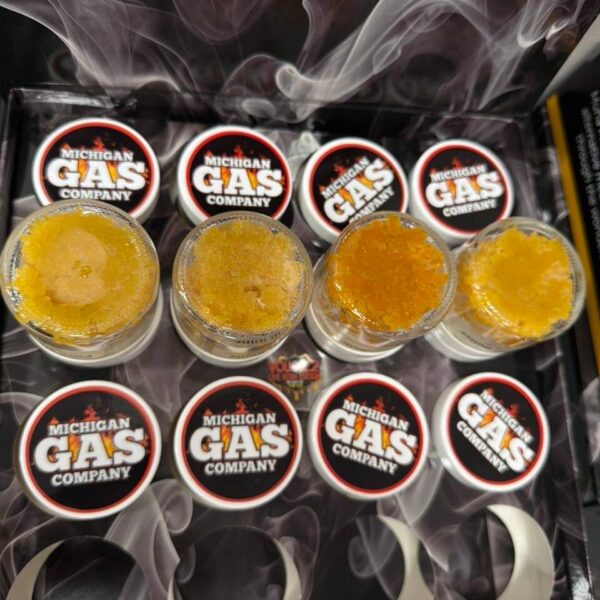
Michigan Gas Company Live Resin
Product Overview
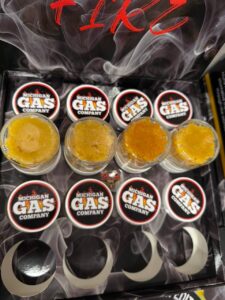
Michigan Gas Company Live Resin is a cannabis concentrate product associated with the live-resin category. Live resin is generally produced from freshly harvested cannabis that is preserved at very low temperatures before extraction. This approach is intended to retain a broader selection of naturally occurring aromatic compounds than some conventional dried-flower extraction processes.
The Michigan Gas Company name identifies the product or brand line, while “live resin” describes the concentrate category. However, the exact cannabinoid concentration, terpene composition, extraction method, package size, and laboratory results can vary between products and production batches.
For that reason, the physical packaging and batch-specific certificate of analysis provide the most reliable information for a particular product. Product descriptions can explain the general characteristics of live resin while distinguishing verified specifications from assumptions.
What Is Live Resin?
Live resin is a cannabis concentrate made from cannabis material that is typically harvested and preserved in a fresh state before extraction. Instead of undergoing the complete drying and curing process associated with traditional flower production, the plant material is commonly frozen soon after harvest.
This preservation method is intended to retain volatile compounds, particularly terpenes, that can change during drying and curing. As a result, live resin is commonly associated with pronounced aromatic characteristics and a comparatively rich terpene profile.
The finished concentrate can vary in consistency. Depending on extraction methods, processing conditions, and formulation, live resin may appear as a sticky, saucy, semi-solid, or similarly concentrated material.
Michigan Gas Company Product Identity
The Michigan Gas Company name can be used to identify a particular cannabis product or product line. However, brand identification alone does not establish the exact characteristics of every item carrying the name.
Cannabinoid concentrations, terpene profiles, extraction specifications, and package sizes can differ between batches. Therefore, a product listing is most accurate when these details are connected to verified packaging or laboratory information.
A neutral description can consequently focus on the characteristics associated with live resin while leaving variable specifications to the applicable product label.
Fresh-Frozen Cannabis Material
One of the defining characteristics of live resin is the treatment of cannabis material immediately following harvest. Fresh plant material contains naturally occurring compounds that can be affected by drying, curing, storage, and exposure to heat or oxygen.
In live-resin production, freshly harvested material is generally frozen rather than dried in the conventional manner. This allows many of the plant’s volatile aromatic compounds to remain present during subsequent extraction.
The result is a concentrate category that is commonly distinguished by its emphasis on preserving the characteristics of fresh cannabis material.
Terpene Profile
Terpenes are naturally occurring aromatic compounds found in cannabis and many other plants. They contribute to the scent and flavor characteristics associated with different cannabis varieties.
Because live resin is produced from fresh-frozen material, it is frequently associated with a relatively expressive terpene profile. However, the specific aroma and flavor characteristics depend on the cultivar, harvest conditions, extraction process, storage conditions, and individual batch.
Consequently, a precise description of Michigan Gas Company Live Resin should rely on documented terpene information whenever it is available. Generic descriptions should not be interpreted as guarantees of a particular aroma or flavor.
Aroma Characteristics
The aroma of a live-resin concentrate can be influenced by its terpene composition. Depending on the cultivar and formulation, aromas may be described using categories such as citrus, fruit, earth, herbs, flowers, fuel, pine, or spice.
The “gas” terminology sometimes associated with cannabis product names can suggest a particular aromatic style, but a product name alone does not establish a precise terpene composition.
Therefore, laboratory testing or official product information provides a more dependable basis for identifying the actual aromatic profile of a specific Michigan Gas Company product.
Texture and Appearance
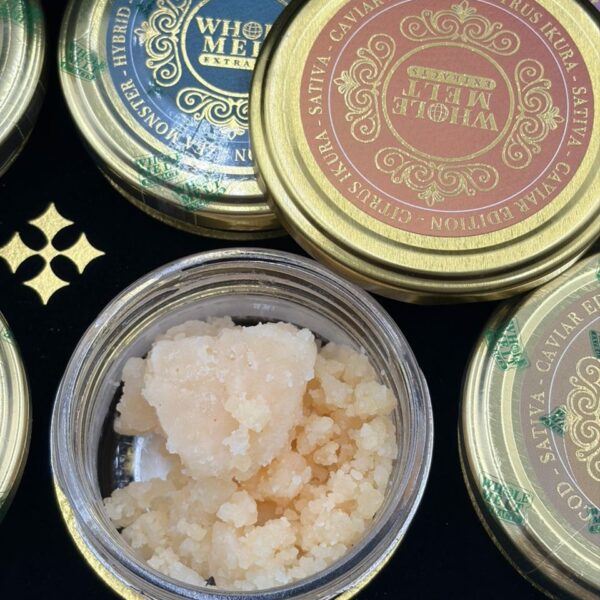
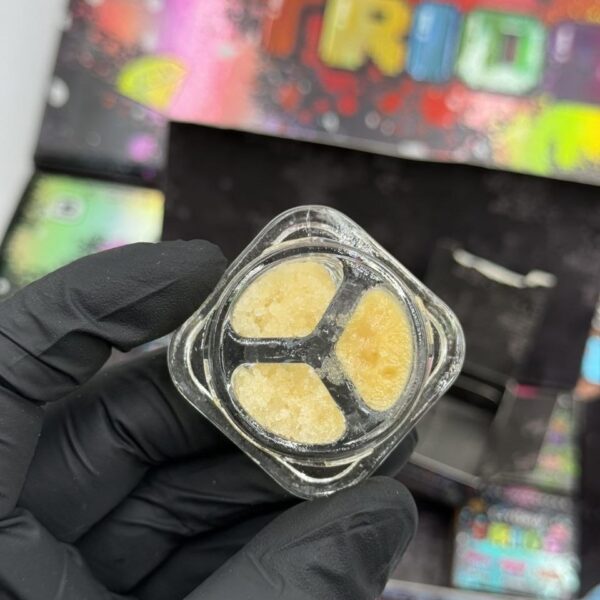
Live resin can exhibit several textures and appearances. Some preparations have a glossy or sauce-like consistency, while others may appear thicker or more semi-solid.
Texture can be influenced by extraction conditions, terpene content, temperature, handling, and storage. Consequently, appearance may differ between products without necessarily indicating a difference in category.
Color can also vary. Depending on the material and processing conditions, concentrates may range from pale gold and amber to darker shades. Visual appearance alone does not provide a reliable measurement of potency or purity.
Cannabinoid Concentration
Cannabinoid concentration is an important specification for any cannabis concentrate. Commonly reported cannabinoids include THC, THCA, CBD, and other minor cannabinoids.
However, the term “live resin” does not establish a specific cannabinoid percentage. Two live-resin products can have substantially different laboratory results.
For Michigan Gas Company Live Resin, cannabinoid values should therefore be taken from the applicable product label or certificate of analysis. Batch-specific documentation can provide information about measured cannabinoid concentrations and other laboratory-tested characteristics.
THC and THCA
THC and THCA are chemically related cannabinoids that can be reported separately on cannabis laboratory results. THCA is the acidic precursor associated with THC, and laboratory reports may present both values.
The total potential THC value can be calculated using a standardized conversion that accounts for the molecular difference between THCA and THC. Nevertheless, the appropriate interpretation depends on the laboratory report and applicable regulatory labeling requirements.
A product description should therefore avoid assigning a THC percentage unless that value has been verified for the particular batch.
Laboratory Testing
Laboratory testing can provide information that cannot be determined from appearance or product naming alone. Depending on applicable regulations, testing may evaluate cannabinoid concentrations, contaminants, microbial content, residual solvents, pesticides, heavy metals, and other quality-control parameters.
A certificate of analysis is particularly useful when it can be matched to the product’s batch or lot number. This connection helps ensure that the laboratory information corresponds with the specific product being described.
Testing requirements differ among jurisdictions. Therefore, the available laboratory documentation should be interpreted according to the applicable regulatory framework.
Extraction and Processing
Live resin production generally involves extraction from fresh-frozen cannabis material. The extraction process is designed to separate desired compounds from the plant material while preserving characteristics associated with the original cannabis.
Different extraction technologies and post-extraction processes can influence the final consistency, terpene content, color, and cannabinoid profile. For that reason, “live resin” identifies a broad concentrate category rather than a single standardized manufacturing formula.
Specific processing details should be attributed to manufacturer documentation when they are available. Unsupported assumptions about solvents, equipment, temperatures, or processing techniques can create inaccurate product information.
Storage Considerations
Concentrated cannabis products can be sensitive to environmental conditions. Heat, light, oxygen, and moisture can affect the physical characteristics and chemical stability of cannabis concentrates over time.
Live resin is commonly associated with storage considerations because its aromatic compounds can be particularly sensitive to environmental exposure. The manufacturer’s storage recommendations therefore remain the most appropriate source for product-specific handling information.
A cool and stable storage environment may help preserve the intended condition of a concentrate, although exact requirements depend on the formulation and packaging.
Packaging
Packaging for regulated cannabis concentrates may contain important product information. Depending on jurisdiction, this information can include product name, net weight, cannabinoid content, ingredients, batch number, production date, testing information, manufacturer or processor details, and regulatory warnings.
The package may also identify whether the product has passed required testing. In regulated markets, labeling requirements are established by the applicable cannabis authority.
Because packaging standards vary, a product page should not assume that every market uses identical labeling or testing requirements.
Product Authenticity
Authenticity is an important consideration when evaluating branded cannabis concentrates. A product’s appearance or name alone cannot establish its origin.
Authenticity may be supported by official packaging, batch information, regulatory labeling, manufacturer information, and available verification systems. Laboratory documentation can provide additional information when it corresponds to the stated batch.
Third-party listings can sometimes contain outdated or incomplete specifications. Consequently, official product documentation remains the stronger reference for specific claims.
Product Consistency
The consistency of live resin can vary according to formulation and production conditions. Some products may remain relatively fluid, while others can become thicker under cooler conditions.
Temperature can affect texture significantly. A concentrate that appears different under varying environmental conditions may therefore still belong to the same product category.
Changes in appearance should nevertheless be distinguished from signs of contamination, damaged packaging, or improper storage. Product-specific guidance remains preferable when evaluating unusual physical characteristics.
Live Resin Compared With Other Concentrates
Live resin differs from several other cannabis concentrate categories primarily through the starting material and processing approach.
Traditional cured-resin products are generally produced from cannabis that has undergone drying and curing before extraction. By contrast, live resin is commonly produced from fresh-frozen cannabis.
Other concentrate categories, such as rosin, can use different extraction principles. Rosin is generally produced through mechanical pressure and heat rather than solvent-based extraction.
Consequently, live resin should not be treated as a universal description for every cannabis concentrate. The production method, starting material, and final formulation can create meaningful differences between categories.
Potency and Product Information
Potency is one of the most important details in a cannabis concentrate listing. Nevertheless, potency should be represented using verified laboratory results rather than inferred from the product category.
Live resin can contain substantial cannabinoid concentrations, but the actual value varies from product to product. The stated net weight also does not indicate potency.
For Michigan Gas Company Live Resin, the relevant product label or laboratory report should therefore be used when discussing THC, THCA, CBD, or other cannabinoids.
Responsible Product Communication
A well-structured product page separates factual specifications from subjective descriptions. This approach improves clarity while reducing the risk of presenting assumptions as verified information.
For example, a listing can accurately identify the product as a live-resin concentrate and state its documented weight. Meanwhile, claims about exact terpene levels, cannabinoid percentages, extraction technology, or laboratory results should be supported by corresponding documentation.
Similarly, claims about guaranteed effects should be avoided because individual responses to cannabis products can vary.
Regulatory Considerations
Cannabis concentrates are regulated differently around the world and, in some countries, remain prohibited altogether. Within jurisdictions where cannabis products are permitted, additional rules can apply to production, testing, packaging, possession, age restrictions, advertising, and transportation.
The legal status of Michigan Gas Company Live Resin cannot be determined solely from the product name. Applicable national, regional, and local regulations remain the relevant source for legal requirements.
Transportation can involve additional restrictions. In particular, crossing jurisdictional or international borders with cannabis products can create legal issues even where cannabis is permitted in the departure location.
Product Specification Table
| Specification | Information |
|---|---|
| Product name | Michigan Gas Company Live Resin |
| Product category | Cannabis concentrate |
| Concentrate type | Live resin |
| Starting material | Fresh-frozen cannabis is characteristic of the category |
| Net weight | Product-specific |
| THC content | Batch-specific |
| THCA content | Batch-specific |
| CBD content | Batch-specific |
| Terpene profile | Product- and batch-specific |
| Texture | Can vary according to formulation and temperature |
| Color | Can vary according to cultivar and processing |
| Extraction method | Manufacturer-specific |
| Laboratory testing | Refer to applicable certificate of analysis |
| Packaging | Market- and regulation-specific |
| Storage requirements | Refer to product-specific labeling |
Frequently Asked Questions
What is Michigan Gas Company Live Resin?
Michigan Gas Company Live Resin is identified as a cannabis concentrate in the live-resin category. Live resin is generally produced from fresh cannabis material that is frozen soon after harvest before extraction.
What makes live resin different?
The defining distinction is generally the use of fresh-frozen cannabis rather than conventionally dried and cured material. This approach is intended to preserve volatile compounds, including terpenes, associated with the fresh plant.
Does live resin have a specific THC percentage?
No. Live resin describes a concentrate category rather than a standardized potency level. THC and THCA concentrations vary according to the specific cultivar, formulation, extraction process, and batch.
What does live resin look like?
Live resin can have a range of textures and colors. It may appear glossy, saucy, sticky, semi-solid, golden, amber, or otherwise variable depending on formulation and environmental conditions.
Does the product contain terpenes?
Live resin is generally associated with preservation of naturally occurring aromatic compounds. The exact terpene profile of a particular Michigan Gas Company product should be verified through its laboratory results or official product documentation.
How is live resin made?
The category generally involves fresh cannabis material that is frozen soon after harvest and subsequently processed through an extraction method. Exact extraction and post-processing techniques vary among manufacturers.
Is every live resin product identical?
No. Cultivar selection, growing conditions, harvest timing, freezing conditions, extraction methods, post-processing, packaging, and storage can all influence the finished product.
Where can product specifications be verified?
The product package and batch-specific certificate of analysis are useful sources. They can provide information about weight, cannabinoid concentrations, batch identification, and applicable testing results.
Does the product name guarantee a particular flavor?
No. Names can suggest a product concept, but exact flavor and aroma characteristics depend on the formulation and terpene composition.
Can live resin be stored like other cannabis products?
Storage requirements vary according to formulation and packaging. Manufacturer-provided storage information is the most appropriate source for a particular product.
Understanding the Live Resin Category
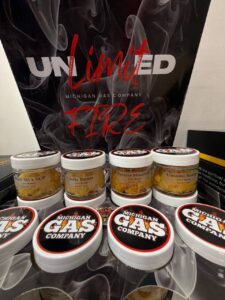
Michigan Gas Company Live Resin falls within a concentrate category that is distinguished primarily by its fresh-frozen starting material. Unlike conventional cannabis flower, which is commonly dried and cured after harvest, live-resin production generally begins with cannabis that is preserved in a frozen state soon after harvesting.
This difference is important because cannabis contains numerous volatile compounds. Terpenes, for example, contribute significantly to the aromatic character of the plant and can be affected by environmental exposure and processing conditions. By maintaining the plant material in a fresh-frozen condition, live-resin production is designed to retain more of these compounds during extraction.
Consequently, live resin is often discussed in relation to aroma, terpene preservation, and concentrate consistency. Nevertheless, the characteristics of a particular product depend on its cultivar, processing method, laboratory results, and storage history.
Fresh-Frozen Processing
Fresh-frozen processing represents one of the principal distinctions between live resin and concentrates made from dried cannabis. After harvest, the plant material is generally preserved at low temperatures instead of being subjected immediately to conventional drying and curing.
The purpose of this approach is to reduce changes to volatile compounds before extraction. Once the material has been prepared, an extraction process separates desired compounds from the plant matter.
The final concentrate can subsequently undergo additional processing. Depending on the manufacturer, this may influence its texture, appearance, terpene concentration, and overall composition.
Because manufacturers can use different techniques, the term live resin should not be interpreted as describing one universally standardized manufacturing procedure.
Terpene Preservation
Terpene preservation is frequently associated with live-resin products. Cannabis plants contain numerous terpenes, and different cultivars can produce different combinations of these compounds.
Some commonly recognized cannabis terpenes include myrcene, limonene, caryophyllene, pinene, and linalool. However, the presence and concentration of individual terpenes vary between cultivars and batches.
For Michigan Gas Company Live Resin, a specific terpene profile should therefore be established through laboratory documentation rather than inferred from the product name. A certificate of analysis may provide a more precise overview when terpene testing has been performed.
Aroma and Sensory Characteristics
The sensory characteristics of live resin can be influenced by its terpene composition. Depending on the cultivar and processing method, a concentrate may present aromatic notes that are described as earthy, fruity, citrus-like, floral, herbal, pine-like, spicy, or fuel-oriented.
The term “Gas” in a product name can create expectations about aroma, but product naming should not be treated as laboratory evidence of a particular terpene profile.
Individual perception also varies. The same aroma can be interpreted differently by different people, while storage conditions can gradually affect volatile compounds.
Color Variations
Live resin can display a range of colors. Pale yellow, golden, amber, and darker shades may occur depending on the starting material, extraction process, cannabinoid and terpene composition, and storage conditions.
Color alone is not a dependable measurement of potency or quality. Two concentrates with different colors can have comparable laboratory results, while visually similar products can have substantially different chemical profiles.
Therefore, laboratory testing remains more informative than visual inspection when cannabinoid or contaminant information is being evaluated.
Texture and Consistency
Texture is another characteristic that can vary among live-resin products. Depending on formulation and processing, a concentrate can appear sticky, glossy, saucy, semi-solid, or comparatively thick.
Temperature has a particularly noticeable influence on concentrate consistency. Cooler conditions can make some products appear thicker, whereas warmer conditions may increase fluidity.
For that reason, a product’s physical consistency should be considered alongside its storage conditions and formulation. A single visual description may not accurately represent how the same product behaves under different environmental conditions.
Cannabinoid Profile
Cannabinoids represent another important aspect of concentrate composition. THC and THCA are among the most commonly reported cannabinoids, while CBD and minor cannabinoids may also appear in laboratory analyses.
The cannabinoid profile of Michigan Gas Company Live Resin should be evaluated using the applicable product label or certificate of analysis. The live-resin classification itself does not determine a particular cannabinoid concentration.
Batch-to-batch differences can occur because cannabis plants naturally vary. Cultivar genetics, cultivation conditions, harvest timing, processing, and formulation can all contribute to differences in laboratory results.
Minor Cannabinoids
Although THC and THCA often receive the most attention in cannabis testing, laboratory reports can identify additional cannabinoids. These may include CBD, CBDA, CBG, CBGA, CBC, and other compounds, depending on the testing panel.
Minor cannabinoids can occur at different concentrations from one product to another. Their presence should therefore be reported only when supported by relevant laboratory data.
A comprehensive product description can acknowledge the possibility of minor cannabinoids without assigning specific percentages that have not been verified.
Certificate of Analysis
A certificate of analysis, often abbreviated as COA, can provide detailed information about a particular cannabis batch. Depending on jurisdiction and laboratory procedures, a COA can include cannabinoid potency, terpene testing, residual solvents, pesticides, heavy metals, microbial contaminants, and other analytical results.
The batch number is especially important. A laboratory report should correspond to the product being evaluated rather than merely representing a generic report associated with a brand.
Consequently, batch-specific documentation can be more useful than generalized claims concerning purity, potency, or testing.
Manufacturing Information
Manufacturing details can help distinguish between different live-resin products. Relevant factors may include the cannabis cultivar, harvest conditions, freezing process, extraction technology, refinement, filtration, and packaging.
Not every manufacturer publicly discloses each stage of production. Therefore, a product description should distinguish between confirmed manufacturing information and characteristics associated generally with the live-resin category.
Where specific processing details have been documented, those details can provide additional context for readers researching the product.

Conclusion
Michigan Gas Company Live Resin can be described as a live-resin cannabis concentrate associated with fresh-frozen cannabis processing. The category is recognized for its focus on preserving characteristics of freshly harvested cannabis, particularly volatile aromatic compounds such as terpenes.
At the same time, product specifications remain dependent on the individual formulation and production batch. Cannabinoid concentration, terpene composition, texture, color, net weight, extraction method, and laboratory results should therefore be verified through official packaging and applicable testing documentation.
A clear product description benefits from this distinction. Rather than relying on unsupported claims, accurate information can explain the live-resin category while identifying the specifications that require batch-specific verification. This provides readers with a more reliable understanding of Michigan Gas Company Live Resin and its place within the broader cannabis concentrate category.





Reviews
There are no reviews yet.