


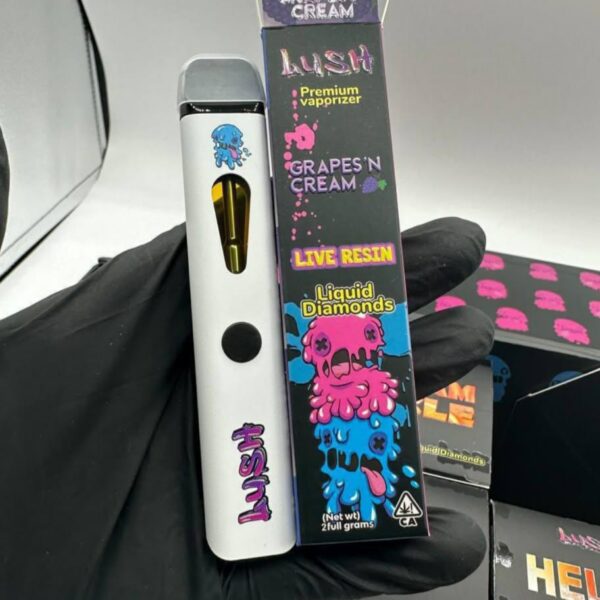
Lush Premium 2G Disposable
Introduction
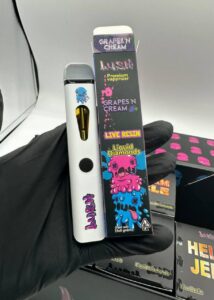
The Lush Premium 2G Disposable is a compact, self-contained vaporizer designed for adult consumers in jurisdictions where its sale and use are permitted by law. This device combines a prefilled reservoir with an integrated rechargeable battery inside a single housing, creating an all-in-one format that does not require assembly, refilling, or routine maintenance. The product is intended to deliver consistent performance throughout its usable lifespan while offering a convenient design for users seeking a portable vaporization device.
This overview provides factual information about the device, its construction, common features, operating principles, maintenance considerations, storage recommendations, and disposal guidance. It does not encourage use or compare the product with competing devices. Instead, it focuses on helping readers understand the general characteristics of a disposable vaporizer marketed under the Lush Premium 2G Disposable name.
Product Overview
The Lush Premium 2G Disposable belongs to the category of disposable electronic vaporization devices. Products within this category generally integrate several essential components into a single enclosure. These components typically include a rechargeable battery, an atomizer or heating element, a reservoir containing the formulation, airflow channels, and an activation system.
Unlike refillable systems, disposable devices are manufactured as sealed units. Therefore, users generally do not replace internal parts, refill reservoirs, or rebuild heating components. Instead, the device remains intact throughout its intended service life.
The compact design makes storage straightforward while minimizing the number of accessories required during operation.
Device Construction
A typical disposable vaporizer includes several integrated components working together.
Outer Housing
The exterior shell protects the internal electronics while providing structural support. Manufacturers commonly use lightweight yet durable materials that help shield the internal components from normal handling.
The housing also contains openings for airflow, charging access (when applicable), and the mouthpiece.
Mouthpiece
The mouthpiece forms the primary point of contact between the user and the device. It is shaped to provide a comfortable fit while directing vapor through the internal airflow pathway.
Manufacturers generally design mouthpieces to remain securely attached throughout the usable life of the disposable unit.
Reservoir
Inside the device is a sealed reservoir designed to contain approximately 2 grams of formulation. Because the reservoir remains sealed during normal use, it reduces the likelihood of contamination from external handling.
The reservoir connects directly to the heating system.
Heating Element
The atomizer converts electrical energy into heat. During operation, the heating element warms the formulation sufficiently to create vapor.
Modern disposable devices frequently utilize improved coil materials that promote even heating while supporting consistent vapor production.
Battery
The integrated battery supplies electrical power to the heating system.
Depending on the model, the battery may support USB charging before the formulation has been fully consumed. Rechargeability extends the usable lifespan of the battery while maintaining operation until the reservoir reaches its intended endpoint.
General Features
Although specifications vary between production batches, disposable vaporizers commonly include features such as:
- Integrated rechargeable battery
- Sealed construction
- Compact dimensions
- Lightweight housing
- Draw-activated operation
- Internal airflow channels
- Leak-resistant design
- Portable form factor
- Factory-assembled components
- Ready-to-use configuration
Feature availability depends on the specific production version.
Operating Principle
Disposable vaporizers function through a relatively simple process.
When airflow is detected, an internal sensor activates the battery. Electrical energy then reaches the heating element. The atomizer warms the formulation contained within the reservoir. Vapor subsequently travels through the airflow pathway before exiting the mouthpiece.
Once inhalation stops, the airflow sensor deactivates the heating system automatically.
This automatic operation removes the need for multiple control buttons on many disposable models.
Rechargeable Operation
Many newer disposable devices include rechargeable batteries.
Rechargeability does not increase reservoir capacity. Instead, it helps ensure that the battery continues operating until the stored formulation has been depleted.
Charging ports may vary depending on the manufacturing version.
Users should always follow the manufacturer’s charging recommendations.
Portability
Disposable devices emphasize portability through compact dimensions and lightweight construction.
Small size allows convenient storage inside compatible carrying cases or designated storage locations.
However, electronic devices should always remain protected from crushing pressure, excessive heat, and moisture.
Storage Recommendations
Proper storage supports device longevity.
Recommended practices include:
- Store in a cool location.
- Avoid prolonged direct sunlight.
- Keep away from excessive humidity.
- Protect from physical impacts.
- Avoid extreme temperatures.
- Store upright whenever practical.
- Keep out of reach of children and pets.
Proper storage helps preserve both electronic components and internal materials.
Maintenance
Disposable vaporizers require relatively little maintenance because they are factory assembled.
Routine care generally includes:
- Keeping the mouthpiece clean.
- Inspecting the charging port.
- Avoiding exposure to liquids.
- Preventing lint accumulation.
- Storing the device properly.
Internal repairs are generally not intended.
Safety Information
Electronic vaporization devices should always be handled responsibly.
Users should inspect the exterior before operation. If visible damage is present, the device should not be used.
The device should never be exposed to fire, excessive temperatures, or immersion in water.
Charging equipment should remain compatible with manufacturer specifications.
Unauthorized modifications may affect normal operation.
Environmental Considerations
Disposable electronic products contain batteries and electronic components.
Accordingly, they should not be discarded with ordinary household waste where electronic recycling programs exist.
Instead, local electronic recycling guidelines should be followed whenever available.
Proper disposal helps reduce unnecessary environmental impact while supporting responsible waste management.
Package Contents
Depending on the manufacturer and distribution region, packaging may typically include:
- One sealed disposable device
- Protective packaging
- Product labeling
- Batch identification
- Safety information
Actual contents may vary.
Lush Premium 2G Disposable
The Lush Premium 2G Disposable is a compact electronic vaporizer designed as an integrated, self-contained device. Unlike refillable systems that require replaceable coils, refillable tanks, and periodic maintenance, disposable devices combine their primary operating components into a single enclosure. This integrated design allows the battery, heating assembly, reservoir, airflow pathway, electronic controls, and mouthpiece to function together within a factory-assembled housing.
Advances in portable electronics have contributed to increasingly compact designs that combine multiple functions while minimizing the number of individual components. Improvements in battery technology, electronic control systems, and precision manufacturing have enabled disposable devices to incorporate sophisticated internal assemblies within lightweight enclosures.
This guide provides factual information about the engineering principles, construction methods, materials, battery technology, airflow systems, storage recommendations, safety considerations, environmental responsibilities, and product lifecycle associated with the Lush Premium 2G Disposable. Individual specifications may vary among manufacturers or production versions, so product-specific documentation should always be consulted for exact technical information.

Product Overview
The Lush Premium 2G Disposable consists of several interconnected systems housed within a sealed enclosure. Typical components include:
- Integrated lithium-ion battery
- Electronic control board
- Heating assembly
- Internal reservoir
- Airflow channels
- Mouthpiece
- Protective outer housing
These components work together throughout the intended service life of the device. Because the product is manufactured as an integrated unit, internal components are generally not intended for replacement or repair by the user.
The compact configuration also reduces the need for additional accessories, contributing to portability and structural simplicity.
Exterior Housing
The exterior housing provides structural support while protecting internal electronic components from routine handling. Materials are selected according to factors such as durability, weight, manufacturing efficiency, and resistance to normal environmental conditions.
Common housing materials include:
- Aluminum alloys
- Polycarbonate
- ABS plastic
- Composite polymers
The housing may also incorporate internal supports that stabilize the battery, reservoir, and electronic circuitry. Exterior surfaces are often designed with smooth contours to improve handling while protecting internal assemblies.
Internal Architecture
The internal arrangement of components reflects careful engineering intended to maximize efficient use of available space.
The battery occupies a central position because it serves as the primary source of electrical energy. The electronic control board manages communication between the activation system and the heating assembly. The reservoir stores the internal liquid formulation, while dedicated airflow channels guide incoming air through the heating chamber before directing it toward the mouthpiece.
Precision manufacturing helps maintain consistent alignment between these components throughout production.
Battery Technology
Portable electronic devices frequently utilize lithium-ion batteries because they provide relatively high energy density while maintaining compact dimensions.
Battery management systems may monitor:
- Voltage
- Current flow
- Charging conditions for rechargeable models
- Electrical protection functions
Battery capacity naturally decreases over time because rechargeable cells gradually age through repeated charging cycles. Environmental factors such as prolonged exposure to excessive heat may also influence battery performance.
Heating Assembly
The heating assembly converts electrical energy into thermal energy.
Depending on the product design, heating technologies may include:
Mesh Heating
Mesh heating elements provide a broad heating surface that distributes heat across multiple contact points.
Ceramic Heating
Ceramic heating systems are often selected because of their thermal stability and durability.
Resistance Coil Heating
Resistance wire coils generate heat through electrical resistance and continue to be used in a variety of compact electronic heating applications.
The specific heating technology depends on manufacturing specifications.
Airflow Design
Airflow systems guide incoming air through designated internal channels before directing it through the heating chamber and toward the mouthpiece.
Engineers evaluate airflow characteristics during product development to balance airflow resistance with efficient movement through the device. Precision manufacturing supports consistency between production units.
Keeping external intake openings free from visible obstructions may help maintain normal airflow characteristics.
Electronic Control Systems
The electronic controller coordinates interaction between the battery, activation mechanism, and heating assembly.
Control systems may regulate:
- Power delivery
- Activation timing
- Battery monitoring
- Protective electronic functions
Many integrated devices rely on airflow detection rather than mechanical switches for activation. When airflow is detected, the controller supplies electrical power according to programmed operating parameters.
Manufacturing Process
Integrated electronic devices generally undergo multiple manufacturing stages before packaging.
These stages may include:
- Electronic component fabrication
- Printed circuit board assembly
- Battery installation
- Heating assembly integration
- Reservoir installation
- Housing assembly
- Functional testing
- Packaging
Automation is widely used during production because it supports consistent assembly quality and repeatable manufacturing processes.

Quality Assurance
Manufacturers often perform inspections before products are distributed.
Quality assurance procedures may include:
- Battery verification
- Electrical continuity testing
- Airflow inspection
- Housing alignment evaluation
- Exterior finish inspection
- Functional testing
- Charging verification for rechargeable models
Batch identification numbers help support production traceability by linking finished products with manufacturing records.
Storage Recommendations
Proper storage contributes to preserving the condition of electronic products.
General recommendations include:
- Store in a cool, dry location.
- Avoid prolonged exposure to direct sunlight.
- Protect from excessive humidity.
- Avoid significant physical impacts.
- Keep away from excessive heat.
Moderate environmental conditions support battery stability and help protect electronic components.
Safety Considerations
Electronic devices containing lithium-ion batteries should be handled responsibly.
General recommendations include:
- Avoid crushing or puncturing the housing.
- Keep the device away from open flames.
- Prevent prolonged exposure to excessive heat.
- Avoid unnecessary contact with water.
- Follow local regulations regarding battery and electronic waste disposal.
Rechargeable versions should be charged only with compatible charging equipment when applicable.
Environmental Responsibility
Integrated electronic devices contain batteries, plastics, electronic circuitry, and metals that may be recoverable through electronic waste recycling programs.
Responsible recycling helps reduce landfill waste while supporting resource recovery. Local regulations vary, so disposal should follow applicable electronic waste requirements.
Product Lifecycle
The lifecycle of an integrated electronic device typically includes:
- Material sourcing
- Component manufacturing
- Assembly
- Inspection
- Distribution
- Operational use
- End-of-life recycling or disposal
Understanding this lifecycle provides context for how portable electronic products are manufactured, used, and responsibly managed after their intended service life.
Frequently Asked Questions
What type of battery is commonly used?
Many compact electronic devices use lithium-ion batteries because of their combination of energy density and relatively small size.
Can internal components be replaced?
Integrated disposable devices are generally manufactured as sealed systems and are not designed for routine internal repairs or component replacement.
Why is storage important?
Appropriate storage helps preserve battery condition and protects electronic components from environmental stress.
Can the device be recycled?
Many communities offer electronic waste recycling programs that accept products containing batteries and electronic circuitry. Users should follow local recycling regulations whenever possible.





Reviews
There are no reviews yet.